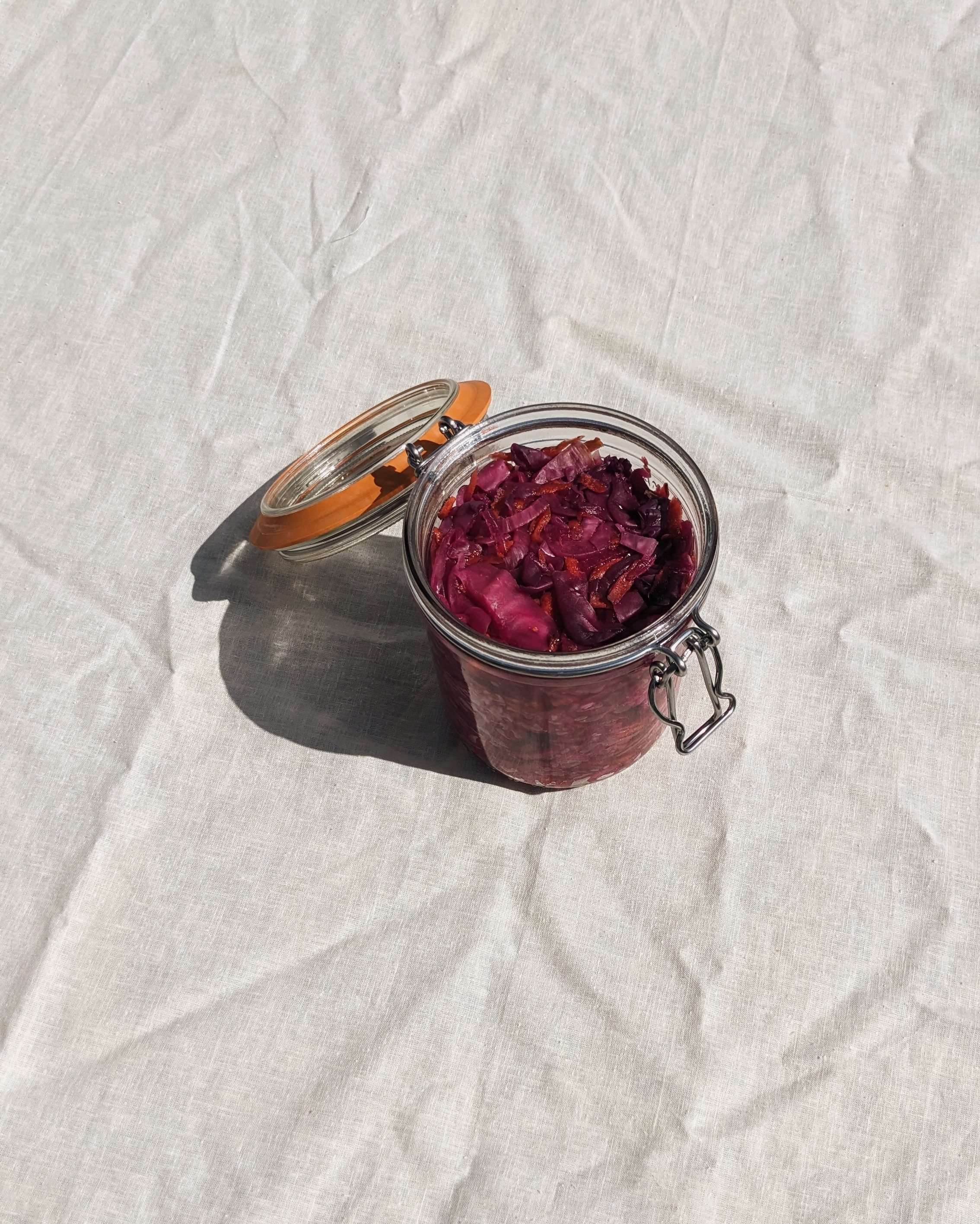
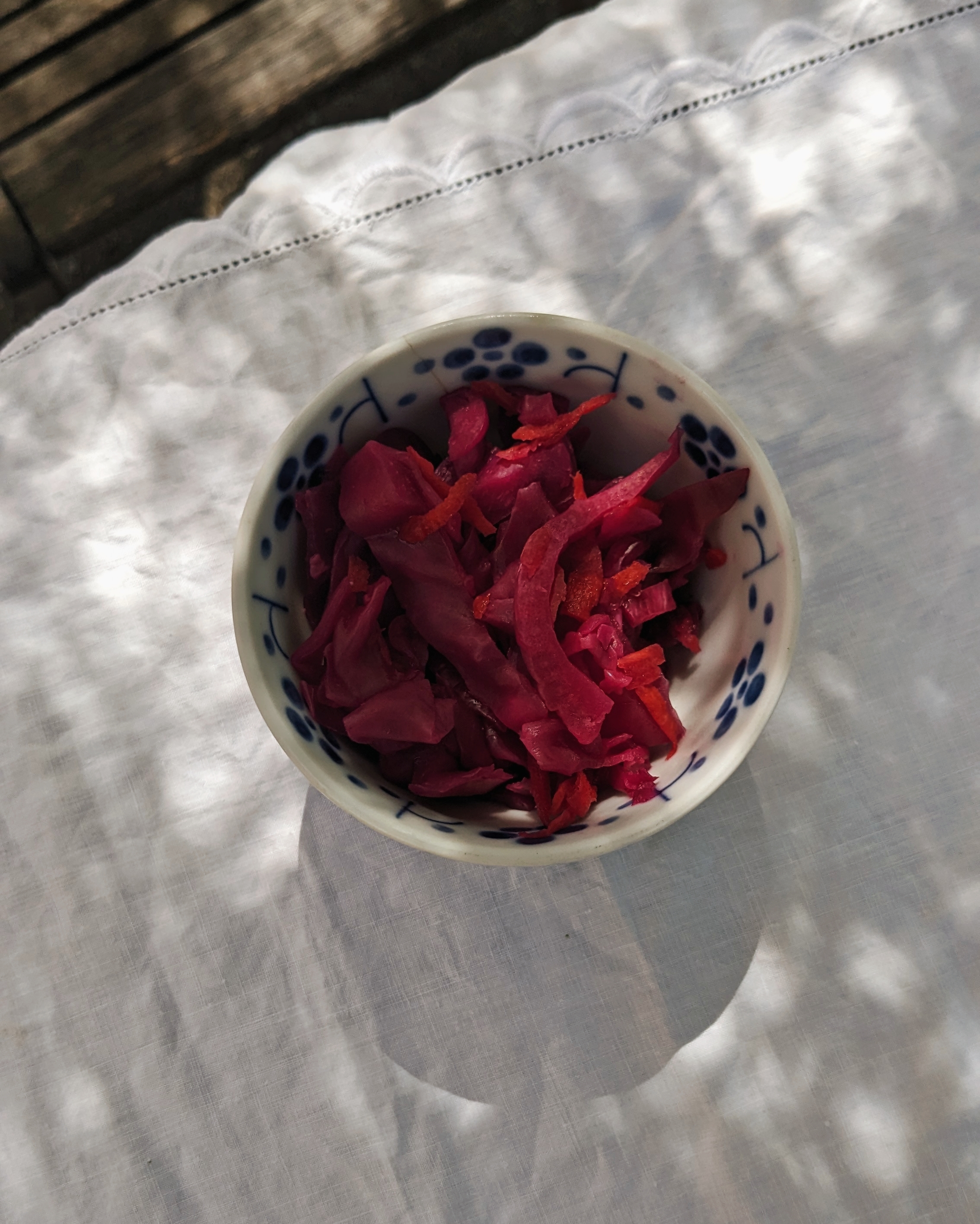
Simple, sweet and earthy. A recipe for a vibrant plum coloured kraut that’s delicious alongside roasted veg, grain bowls, sandwiches or morning eggs.
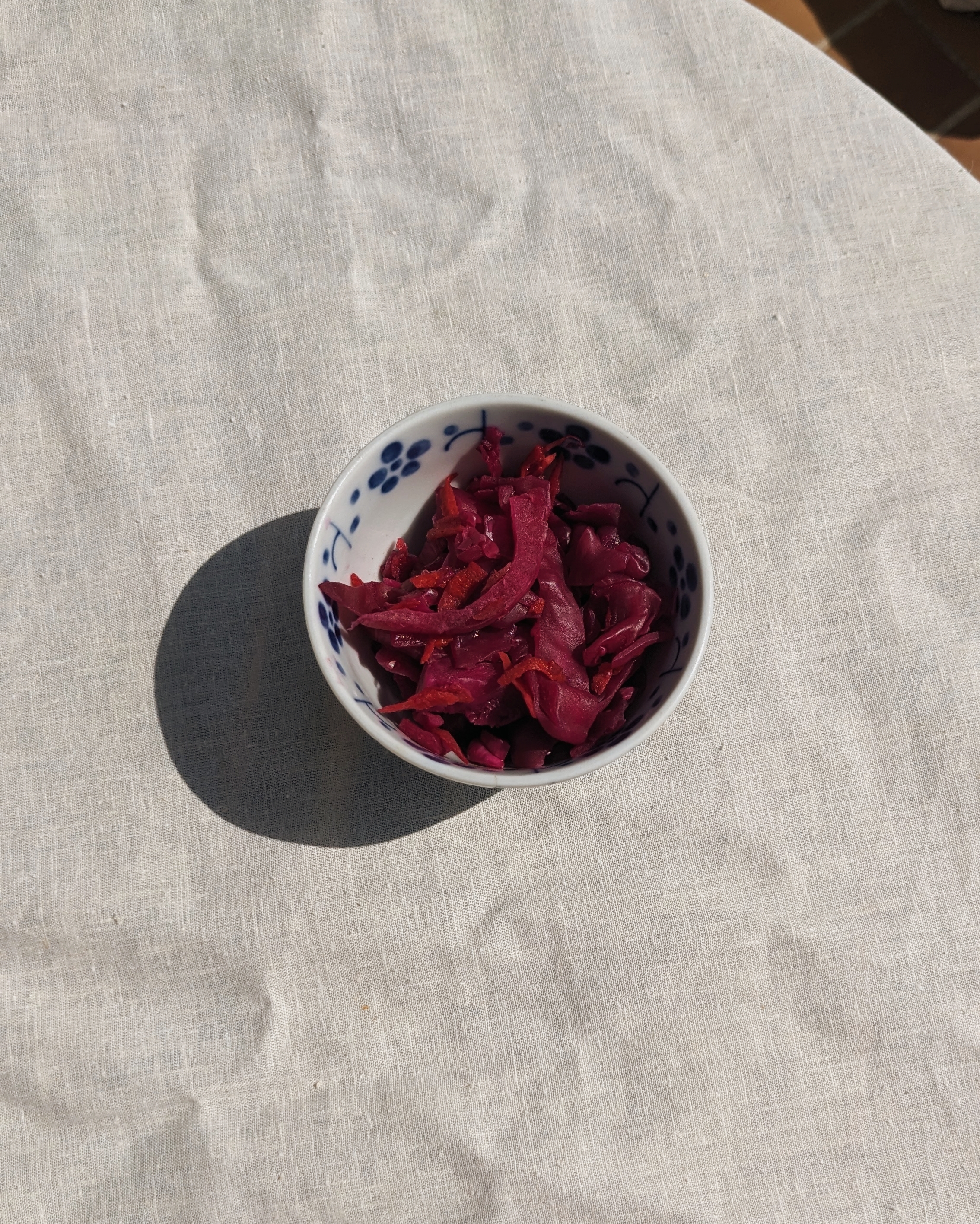
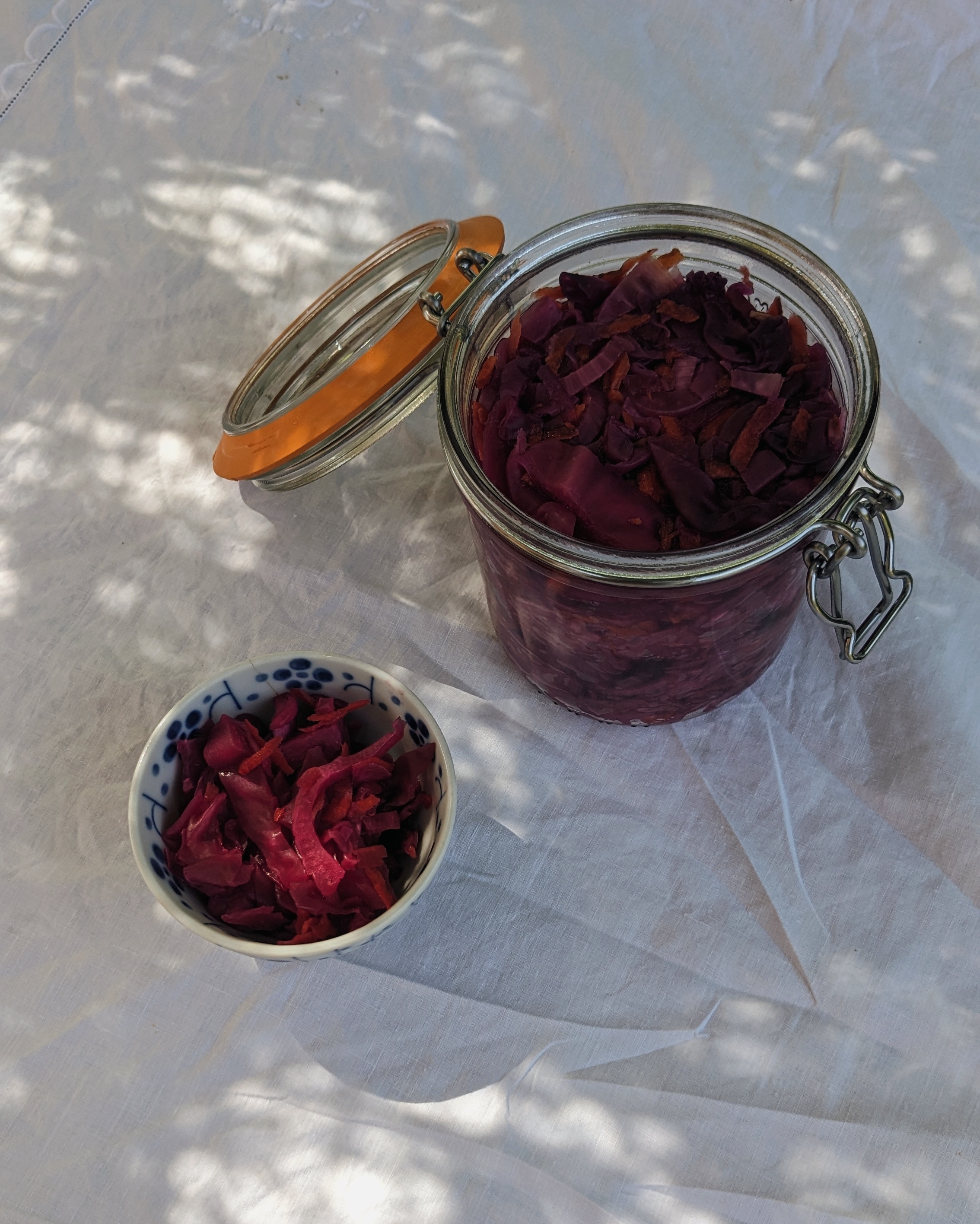
Made with vegetables, salt and time: a naturally fermented kraut that develops its tangy flavour from to the beneficial bacteria already present on the vegetables.
Over the course of a week or two, the cabbage transforms into something complex, rich in live cultures and full of flavour.
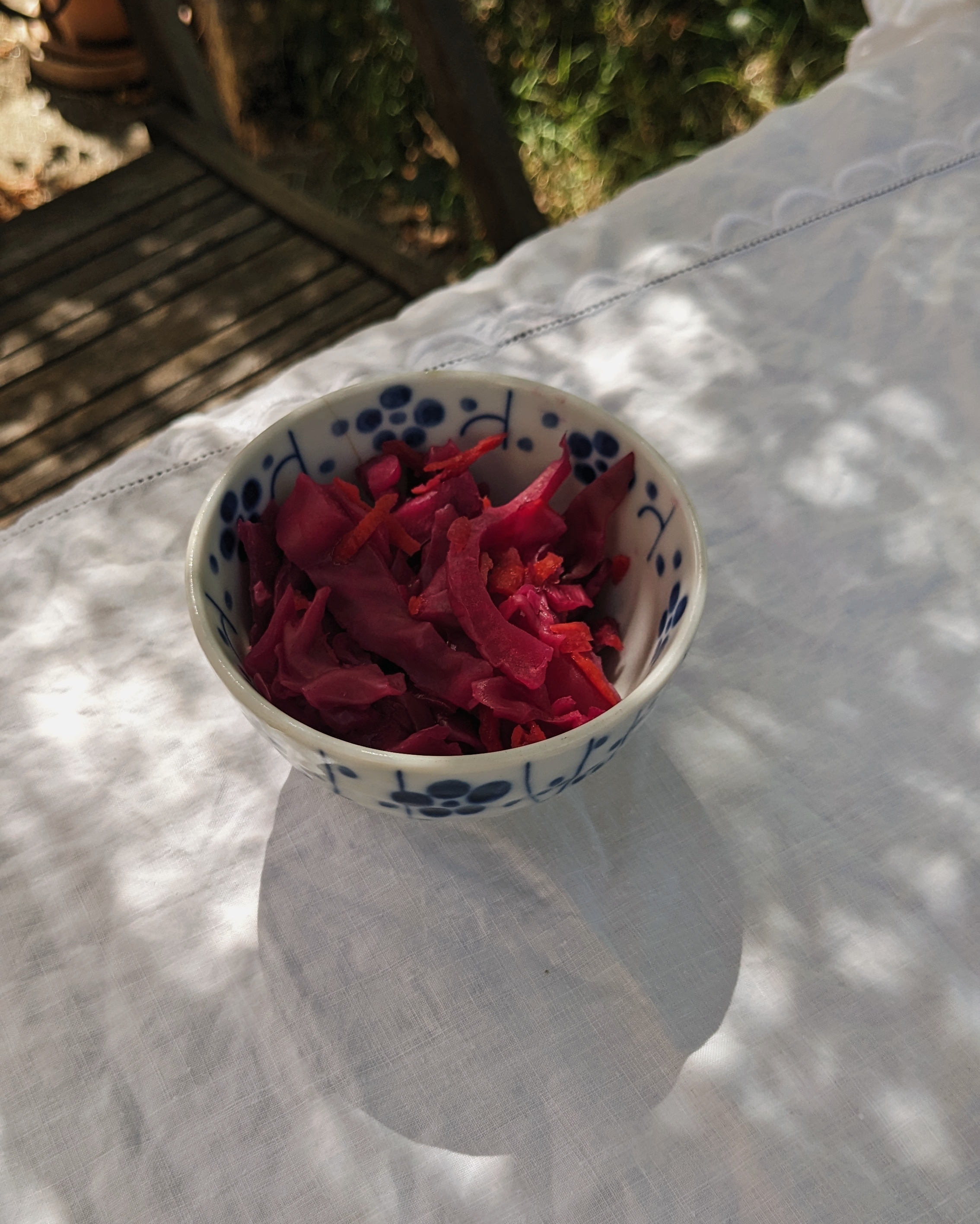
RED CABBAGE & FENNEL KRAUT
Ingredients
- 1 medium red cabbage
- 1 large fennel bulb, finely sliced
- 1 medium carrot, grated or cut into matchsticks
- Fine sea salt (2% of the total weight of the prepared vegetables)
Optional Extras
Aromatics
- 2–3 garlic cloves, thinly sliced or grated
- ½ small red onion, finely sliced
- 1–2 shallots, finely sliced
Seeds & Spices
- 1 tsp fennel seeds
- 1 tsp caraway seeds
- 1 tsp coriander seeds, lightly crushed
- ½ tsp black peppercorns, lightly crushed
- 2–3 juniper berries, crushed
- 1 bay leaf, tucked into the jar before fermenting
Equipment
- 1 litre kliner jar
- Large mixing bowl
- Kitchen scales
- Optional: fermentation weight (or a small clean jar or flat stone that fits inside your larger jar)
Method
- Remove any damaged outer cabbage leaves and set one clean leaf aside for later.
- Finely shred the cabbage, thinly slice the fennel and grate the carrot (or cut into fine matchsticks).
- Weigh all of the prepared vegetables together and calculate 2% of their total weight in salt (for example: if you have 1kg of ingredients you will need 20g of salt – more on this below).
- Place the vegetables in a large bowl. Sprinkle over the salt along with any optional extras.
- Massage everything together with clean hands for 5–10 minutes. As the salt begins drawing moisture from the vegetables, they’ll soften and release their natural juices, creating a brine.
- Leave the mixture to rest for 20 mins or so, then give it another quick massage if needed until there’s plenty of liquid in the bowl.
- Pack the vegetables firmly into a clean jar, pressing down after each handful to remove any air pockets. Pour over all of the left over brine from the bowl.
- Fold the saved cabbage leaf over the surface of the kraut to help keep the shredded vegetables submerged beneath the brine. If using a bay leaf, tuck it beneath the cabbage leaf. Add your fermentation weight if using.
- Close the jar and leave to ferment at room temperature, out of direct sunlight, for 3 – 7 days.
- Begin tasting after day 3. Once the kraut has reached a tanginess you enjoy, seal the jar fully and transfer to the fridge, where fermentation will carry on just at a much slower rate.
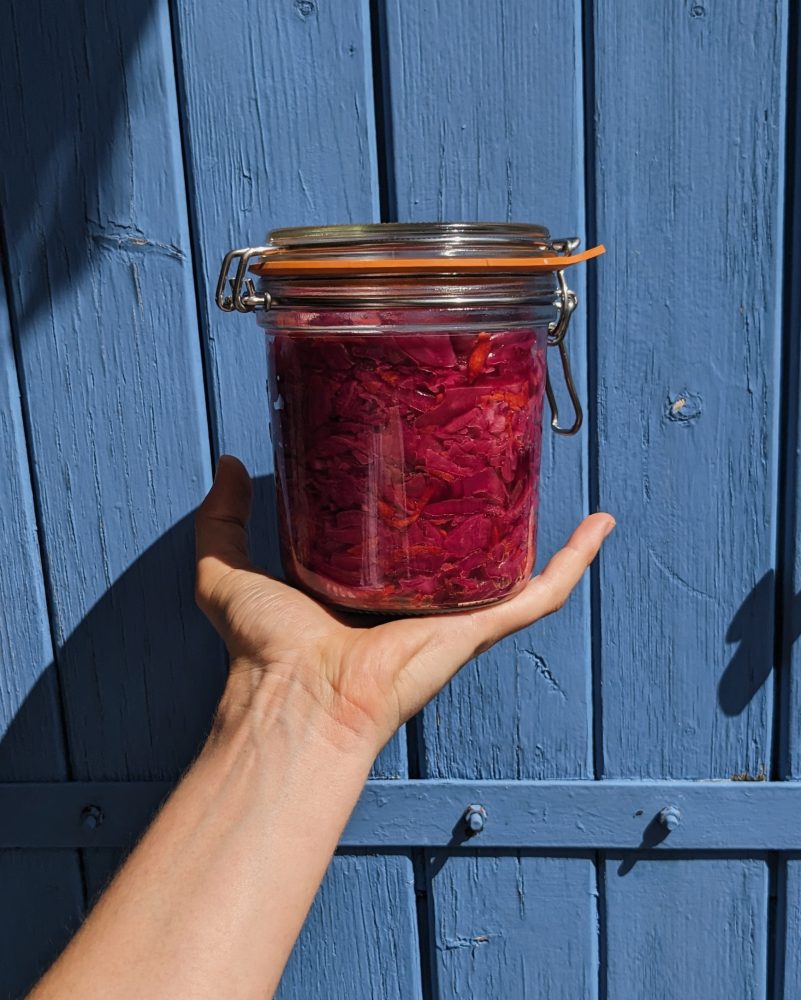
Serving Suggestions
Enjoy a spoonful alongside salads, grain bowls, roasted vegetables, baked potatoes, sandwiches or eggs. It’s equally delicious served with oily fish, hummus or cheese, adding freshness, crunch and a naturally tangy finish to everyday meals.
Fermentation Notes
- Always keep the vegetables fully submerged beneath the brine.
- Small bubbles, a pleasantly sour aroma and slightly cloudy brine are all signs of a healthy fermentation.
- If you notice any fuzzy mould growing above the brine, discard the batch and start again.
- Once refrigerated, your kraut will continue to develop flavour slowly and should keep well for several months.
Why 2% Salt?
A salt concentration of around 2% creates the ideal environment for fermentation. It encourages the growth of beneficial lactic acid bacteria while discouraging unwanted microbes, allowing the vegetables to ferment safely and develop their characteristic tangy flavour. The easiest way to achieve this is to weigh your prepared vegetables and calculate 2% of their total weight.
For example:
- 500g vegetables = 10g salt
- 750g vegetables = 15g salt
- 1kg vegetables = 20g salt
Nourishing Notes
Red cabbage: naturally rich in anthocyanins, vibrant purple plant pigments that act as antioxidants. A good source of vitamin C, vitamin K and fibre. Gram for gram, raw red cabbage often contains more vitamin C than oranges.
Fennel: sweetness along with fibre, vitamin C and potassium. Good for supporting digestion.
Carrots: rich in beta-carotene, which gets converted it into vitamin A (retinol) as needed, to help support healthy vision, skin and immune function.
I hope you enjoy! x
 FLEURMENTATION