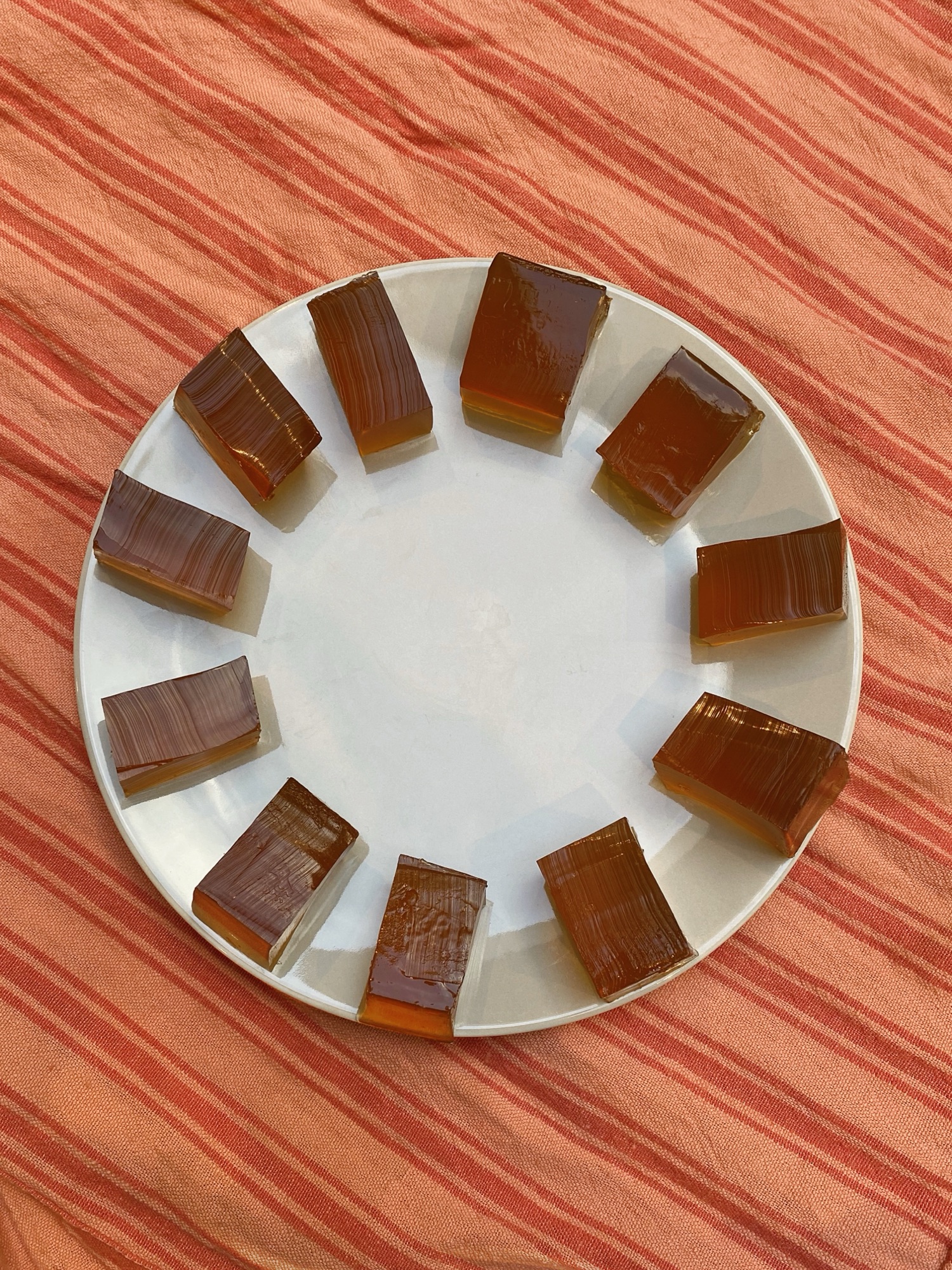
A simple no fuss way to turn your homemade or favourite kombucha brand into a little jelly snack.
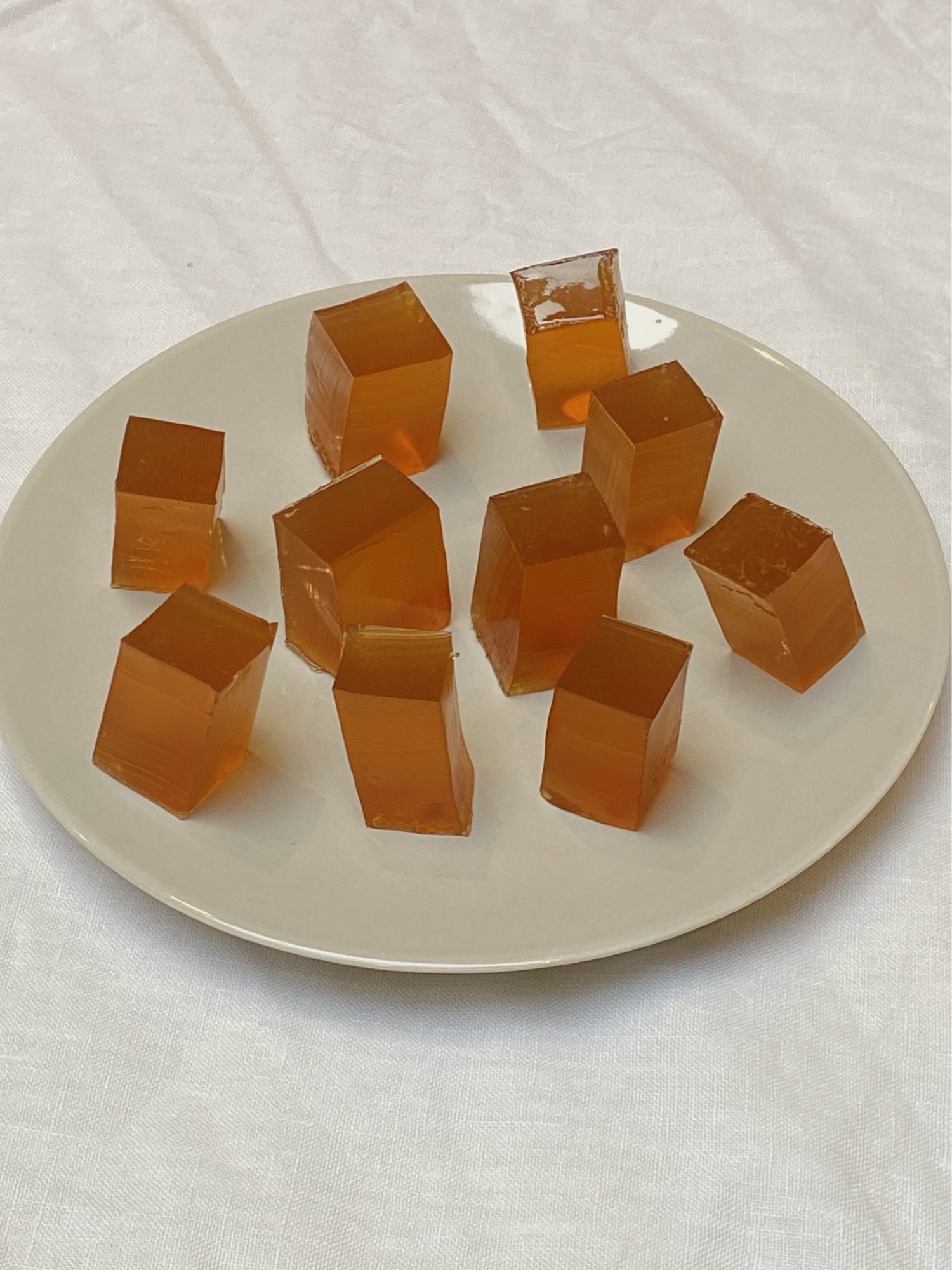
Made with kombucha and grass-fed gelatine, they’re an easy way to enjoy the probiotic and gut-friendly benefits of both ingredients in a different form.
I like to make these (or another form of jelly cube) regularly, and have a jar in the fridge on the go I can reach for when craving a little afternoon snack and pick me up.
The gelatine sets the kombucha into soft, bouncy cubes while adding protein and amino acids that support skin, gut lining, joints and digestion.
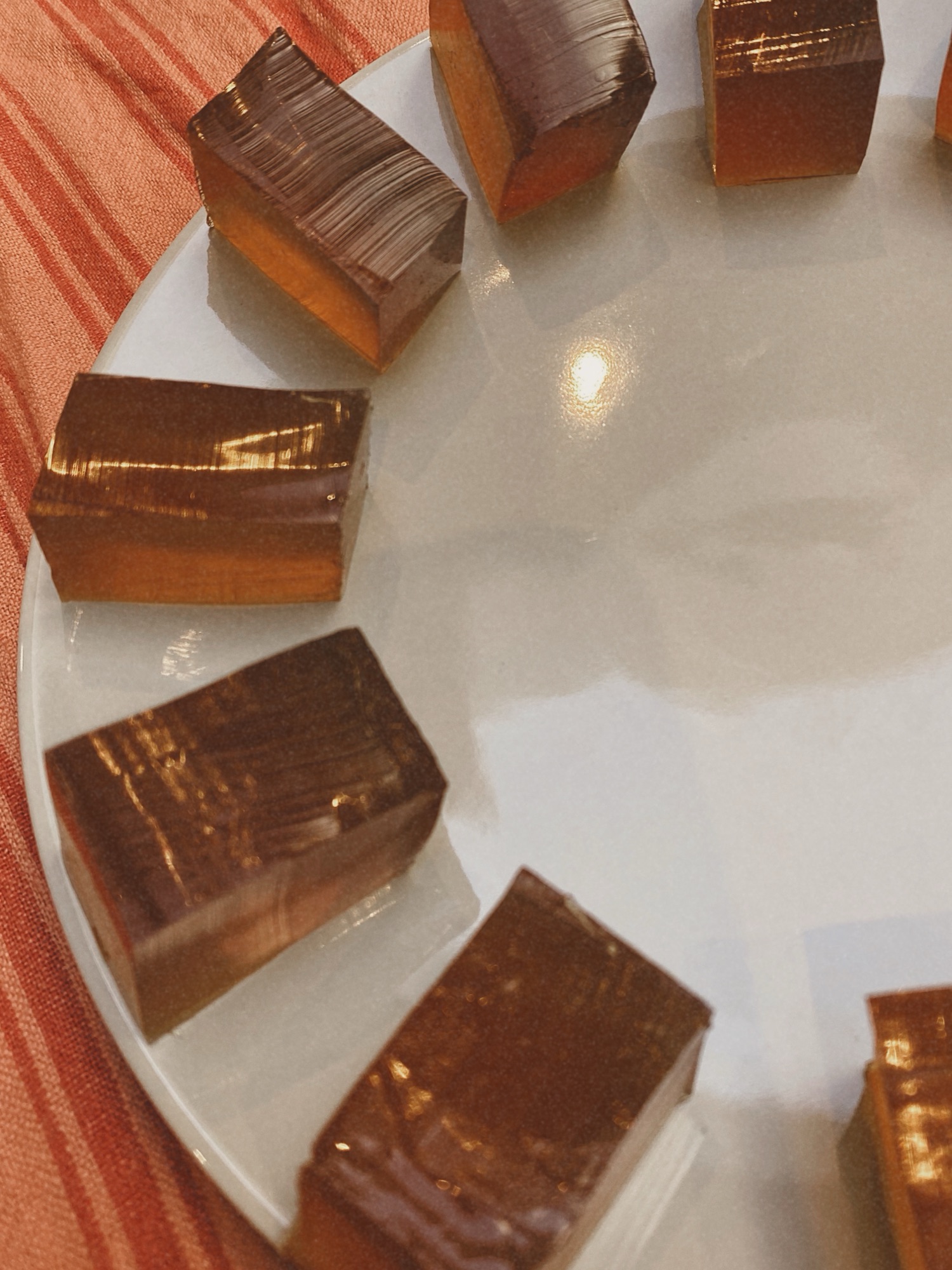
KOMBUCHA JELLY CUBES
Ingredients
- 500ml kombucha (choose a flavour you enjoy)
- 25g Ossa Organic Grass-Fed Gelatine
Method
- Pour 100ml of the kombucha into a small bowl.
- Sprinkle the gelatine evenly over the surface and leave for 5–10 minutes to bloom. The gelatine will absorb the liquid and become thick and sponge-like.
- Meanwhile, gently warm 250ml of the remaining kombucha in a saucepan over a low heat. Do not boil.
- Add the bloomed gelatine to the warm kombucha and whisk until completely dissolved.
- Remove from the heat and stir in the remaining cold kombucha.
- Pour into a shallow dish, loaf tin or silicone moulds.
- Refrigerate for 3–4 hours, or until fully set.
- Remove the jelly from the mould. If using a dish or loaf tin, dip the base briefly in warm water to help release it, then turn out onto a board and cut into cubes. If using silicone moulds, simply push the jelly out from the bottom, but go slowly to keep the shape intact. The more gelatine you use the firmer the cubes or shapes will be.
- Store in an airtight container in the fridge and enjoy within 5 days.
A note on heat: Kombucha contains beneficial yeasts and bacteria. While some of these may be reduced by warming, gently heating only a portion of the kombucha allows the gelatine to dissolve while preserving more of the benefits of the drink than boiling it would.
Nourishing Notes
Benefits of Gelatine
Rich in amino acids, particularly glycine and proline, which help support:
- Healthy skin elasticity and hydration
- Joint, cartilage and connective tissue health
- Hair and nail growth
- Gut lining integrity and digestion
- Sleep quality and nervous system regulation (glycine is known for its calming effect)
Gelatine is made from slowly cooked animal connective tissue, and has been used traditionally in broths and jellies for generations.
Before commercial sweets became widely available, fruit jellies and gelatine desserts were a popular way of preserving seasonal ingredients and creating nourishing treats from homemade broths and fruit juices.
Gelatine vs Collagen
Collagen and gelatine come from the same source but are processed differently.
In Collagen, peptides have been broken down into smaller proteins, allowing them to dissolve easily into hot or cold liquids. They don’t set and are ideal for stirring into smoothies, coffee or yoghurt.
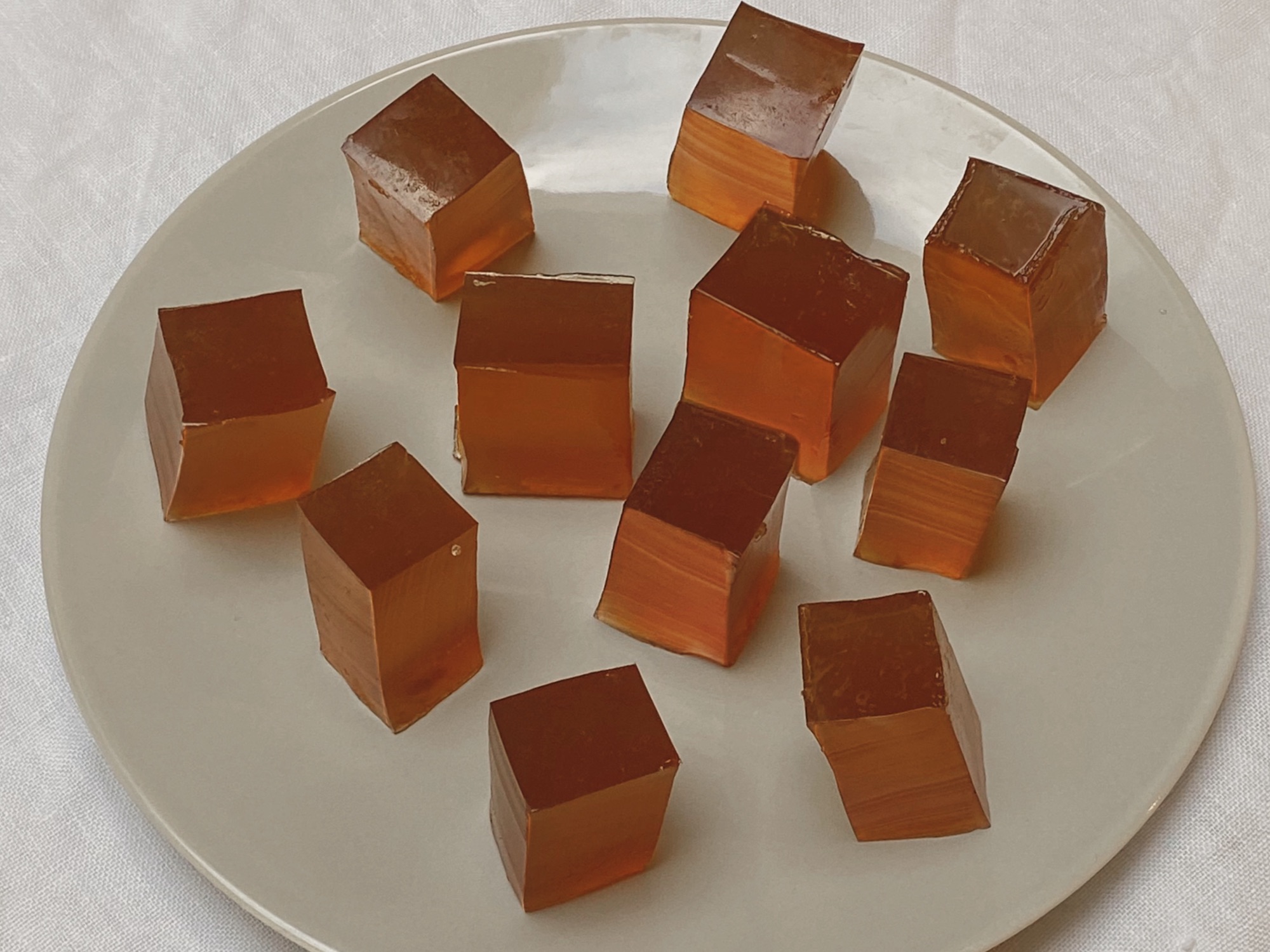
Gelatine is collagen that has been only partially broken down. When dissolved in warm liquid and cooled, it forms more of solid gel, which is why it works so well for making jelly (or kombucha cubes).
Nutritionally, they’re very similar and contain many of the same amino acids. The main difference is how they behave in recipes.
Think of gelatine as the ingredient for creating structure and wobble, while collagen peptides disappear (almost seamlessly) into drinks and foods.
I hope you enjoy! x
 FLEURMENTATION