Sounds fancy…but actually just means adding salt to water and pouring over vegetables and letting it to do its thing for a few days.

I think of fermenting as a lesson in patience and delayed gratification. Sometimes I think of it like gardening… we ourselves are not physically growing the plants or actually fermenting the vegetables ~ all we are doing is simply making a nice home for the seeds or microbes to live and then giving them time and space to evolve. The rest is up to nature.
Something I keep asking myself at the moment ~ is this good for my future self? When it comes to fermenting, the answer is always yes. Will pouring some salt water on these cut up vegetables and leaving them on the side for a few days be good for my future self? Most definitely. Yes.

Upping the amount of fermented vegetables we consume is greatly encouraged when trying to improve gut health (and keeping my autoimmune disease at bay), scroll to the bottom for a video with fermentation wizard Sandor Katz talking about the health benefits of fermented foods.
Fermented vegetables are an easy way to add fibre and probiotics into our diet. They are so good sprinkled on top of salads, on the side with meat or a roast, as a snack straight out the jar or on top of a rice bowl.
This recipe is the simplest method for fermenting raw vegetables. Carrots, radishes, red pepper and garlic are some of the easiest and tastiest to start with if you are at the beginning of your fermentation journey ~ extra points for cutting them into pretty shapes :~)
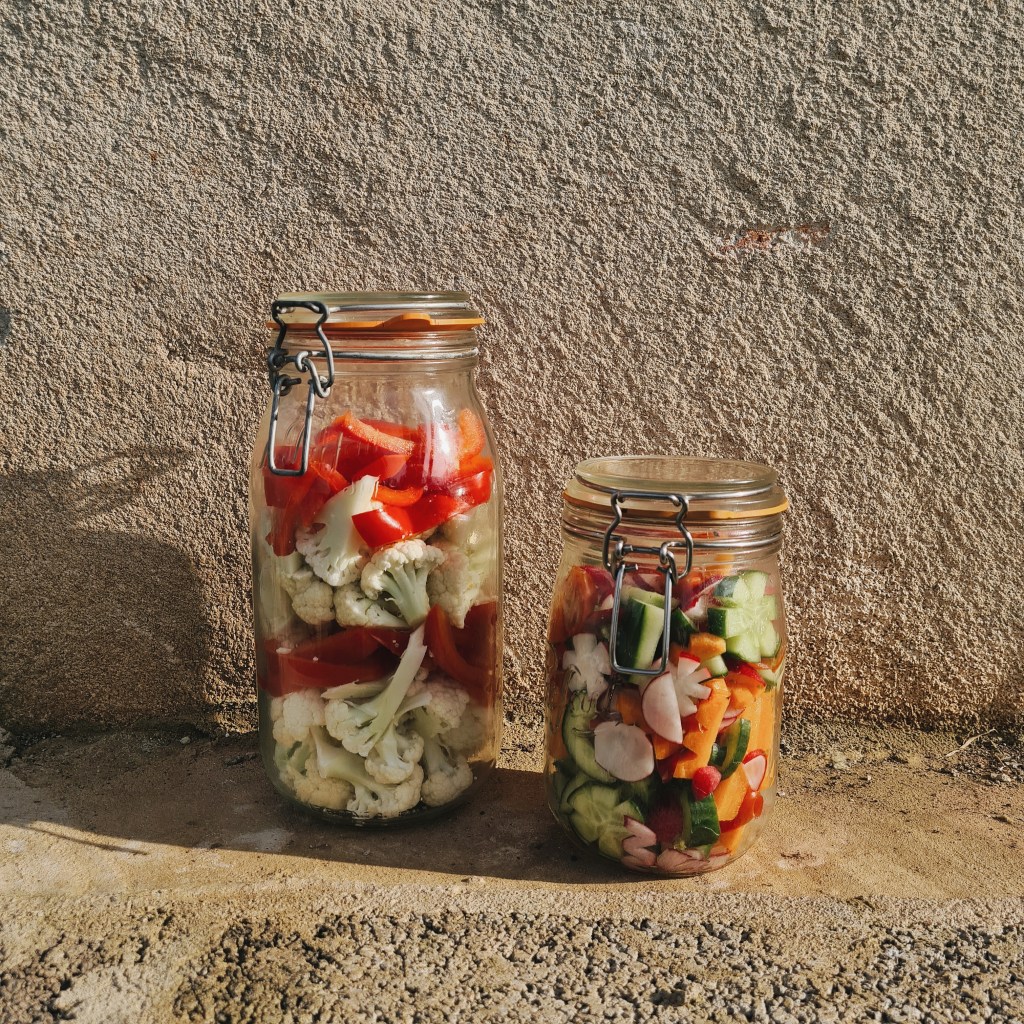
Lacto-fermented vegetables
Ingredients:
- Raw vegetables
- 25g sea salt
- 1 litre water
+ a 1 litre kilner jar with a seal
Method:
- Dissolve the salt in a jug with a little hot water.
- Add the rest of the water and leave to cool.
- Cut up your chosen vegetables.
- Place the vegetables into the kilner jar leaving a 1 inch gap at the top.
- When the water is cold, pour over the vegetables to submerge them all in the brine solution making sure to leave a 1 inch gap at the top of the jar.
- Seal the kilner and leave on the side for a 3-5 days.
- After the set amount time taste test the vegetables to see how pickled they are ~ you’re looking for tang instead of saltiness.
- If you like the flavour you can then place the kilner in the fridge to be enjoyed over the next few weeks.
- If you would like them more fermented, leave the kilner out for another day or two until you are happy with how they taste. Then move to the fridge.
- Fermentation will continue in the fridge, just at a much slower rate.
- Enjoy for up to 10 months :~)
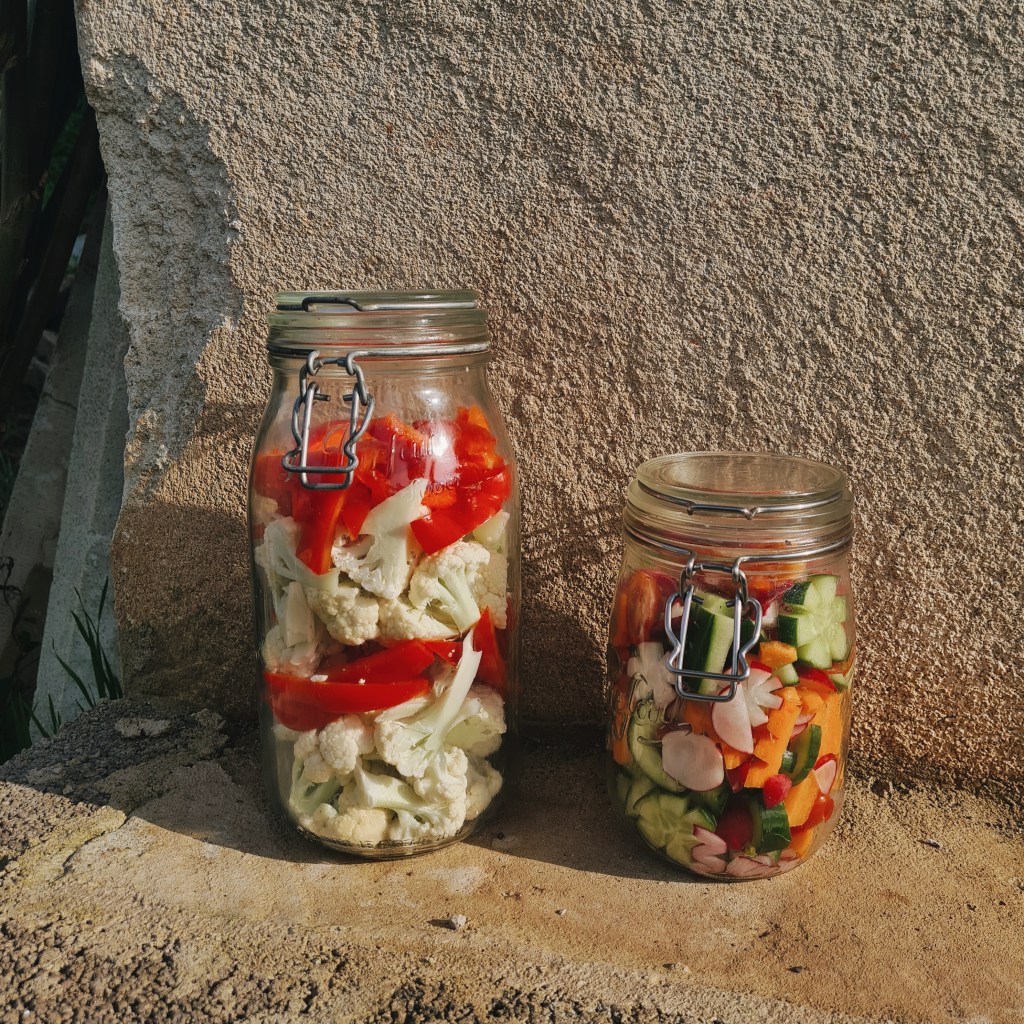
 FLEURMENTATION