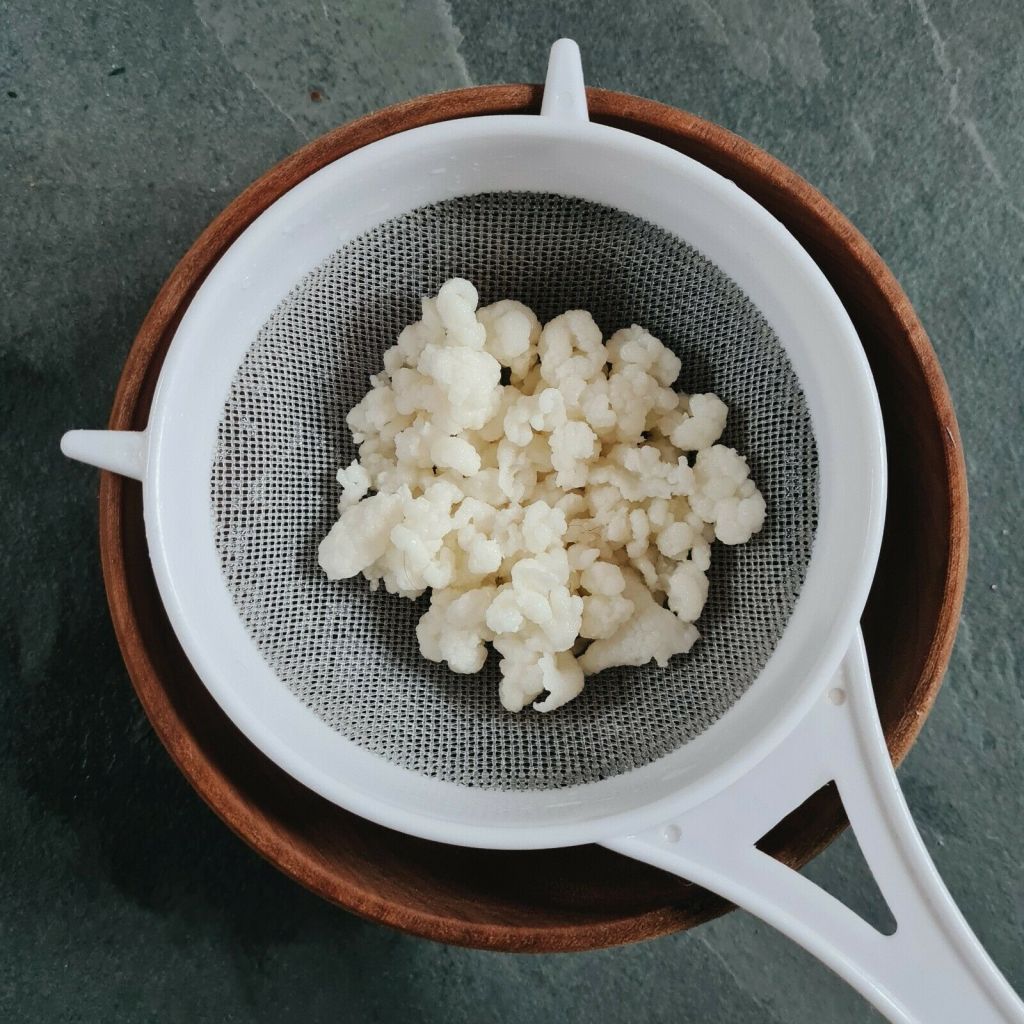
“Kefir comes from the Turkish word ‘keyif,’ which means “good feeling.”
If there was a hierarchy of fermented foods I think milk kefir would be queen. It contains around 10 billion alive and active micro-organisms that can promote gut health.

Milk kefir grains are thought to have originated in the Caucasus mountains a few thousand years ago. Nomadic people used kefir grains to preserve milk for long periods of time before refrigeration was invented. When healthy and fed, the grains will grow and multiply at speed.
There are so many anecdotes from people who have said kefir has helped them in numerous ways. Shann Nix Jones from The Chuckling Goat used kefir to cure her husband and then her son from disease. I have taken a leaf out of Jones’ book and also use goat milk to ferment my kefir, it is meant to be easier to digest (Dr. Gundry allows it on the Plant Paradox as it does not have any of the A1 casein protein typically found in cow milk that can cause digestive problems).
Making Milk Kefir
Equipment needed:
- Milk kefir grains
- A glass jar (a kilner or mason jar work really well)
- A clean piece of muslin or kitchen towel
- Rubber band
- Plastic sieve
- Milk of your choice
Method:
- Wash and sanitise all your fermentation equipment – you can do this by placing your equipment in boiling water and leave to air dry.
- Pour 250ml of milk in a glass jar or kilner jar (as the grains start to grow you can increase the amount of milk ie. when you notice they are nearly double in size you can double the amount of milk).
- Cover the jar with a piece of muslin cloth or a kitchen towel and secure it with a rubber band. (A kilner jar with the orange seal removed also works really well to let air circulate).
- Leave the kefir grains in the milk for 12 – 24 hours in a cool place – a cupboard works well.
- (Taste the milk kefir after 12 hours – it should be slightly sour and tangy to taste. The kefir will ferment quicker in warmer places and slower in colder ones so if it still tastes very milky still leave to ferment for a further 12 hours.
- Strain the fermented milk kefir though the plastic sieve set over a jug or bowl. The sieved kefir milk can now be drank and enjoyed.
- Wash your equipment and start the process again.
Once it is made it can be drunk straightaway or used in recipes and smoothies. The kefir can be wrapped in a muslin or calico cloth and left to hang for a further 24 hours to make a kefir cheese labneh. Kefir ice cream is also something I want to try and master.
Using an alternative milk such as coconut or almond is another way to play around with the kefir and try different flavours – but the grains need lactose to grow so every other fermentation does need to be with dairy milk.
Kefir grains can be bought online from fermentation shops or on eBay from people making it themselves at home. It grows rapidly when it is healthy. I sell some of mine as it keeps growing and it feels like such a nice way to share a healthy food around. If you would like to buy some of my grains grown in Goat Milk you can find them here.
 FLEURMENTATION